v3.9.1 patch week — something broken?
Shopping Mall map (3.9.0), player IDs, Mo Eeyo skip-votes + host BAN (3.8.0), 3.9.1 emote paging / ceiling-cling gap. Start with the quick fix checklist.
Win More Games.
Discover the best hiding spots, survival strategies, and camouflage tips for Meccha Chameleon. The fastest way to find the best hiding spots in Meccha Chameleon.
New Workshop Maps — First-Week Guides
Scout new Steam Workshop drops before seeker meta solidifies
Xoda House
Compact house interior workshop map.
Meccha Olympus
Greek temple-themed workshop stage trending in July 2026 — community still scouting verified spots.
Under Construction
Construction-site workshop map with scaffolding and material piles.
Low Poly Mini Town
Compact low-poly town from the Restaurant Building creator. Newly listed — hiding spot guides coming soon.
Most Subscribed Workshop Maps
Sorted by Steam subscribers — Minecraft, Swimming Pool, Art Gallery & more
ART GALLERY
5.0M Steam subscribers
Museum with famous paintings and portraits on the walls. Paint yourself into the Mona Lisa or blend with the floor — unique body-paint mechanics.
Minecraft
4.5M Steam subscribers
Blocky village layout with familiar textures. Great for groups learning custom maps — trees, crafting tables, and wood tones offer varied hides.
Simpsons Family House
3.8M Steam subscribers
Simpsons living room and kitchen interior. Instantly readable props — trending in community lobbies.

Bikini Bottom
3.6M Steam subscribers
SpongeBob SquarePants Bikini Bottom recreation. Pineapple house, Krusty Krab, and cartoon props — bright palette with iconic IP landmarks.
Swimming pool!
3.5M Steam subscribers
Small painted-style pool map. Bright colors and hand-drawn walls — community favorite for chaotic funny rounds.
Meeting room
3.3M Steam subscribers
Modern office interior with reception, cafeteria, and dense office props. Strong silhouette-breaking furniture.
Minecraft House
2.6M Steam subscribers
Survival house with a large yard. Hide as a torch, flower, or grass block — inside and outside hides.
Viking Dining [Re-subscribe if in sky]
2.5M Steam subscribers
Viking tavern with shields, swords, spears, and ale. Scattered props on a compact map — great for prop mimic.
Today's Tip
On brick maps, sample mortar shadow and brick face separately. Horizontal course lines break the torso read (meccha-chameleon.net Brick Loft guide).
Source: meccha-chameleon.net →Weekly Challenge
Win without ceiling camping
Survive on Mansion Library Shelf using spine color + flat crouch pose. No pillar or ceiling routes allowed this week.
Try this spot →Best Spots This Week
Featured and trending spots this week — community picks beyond the all-time top rated
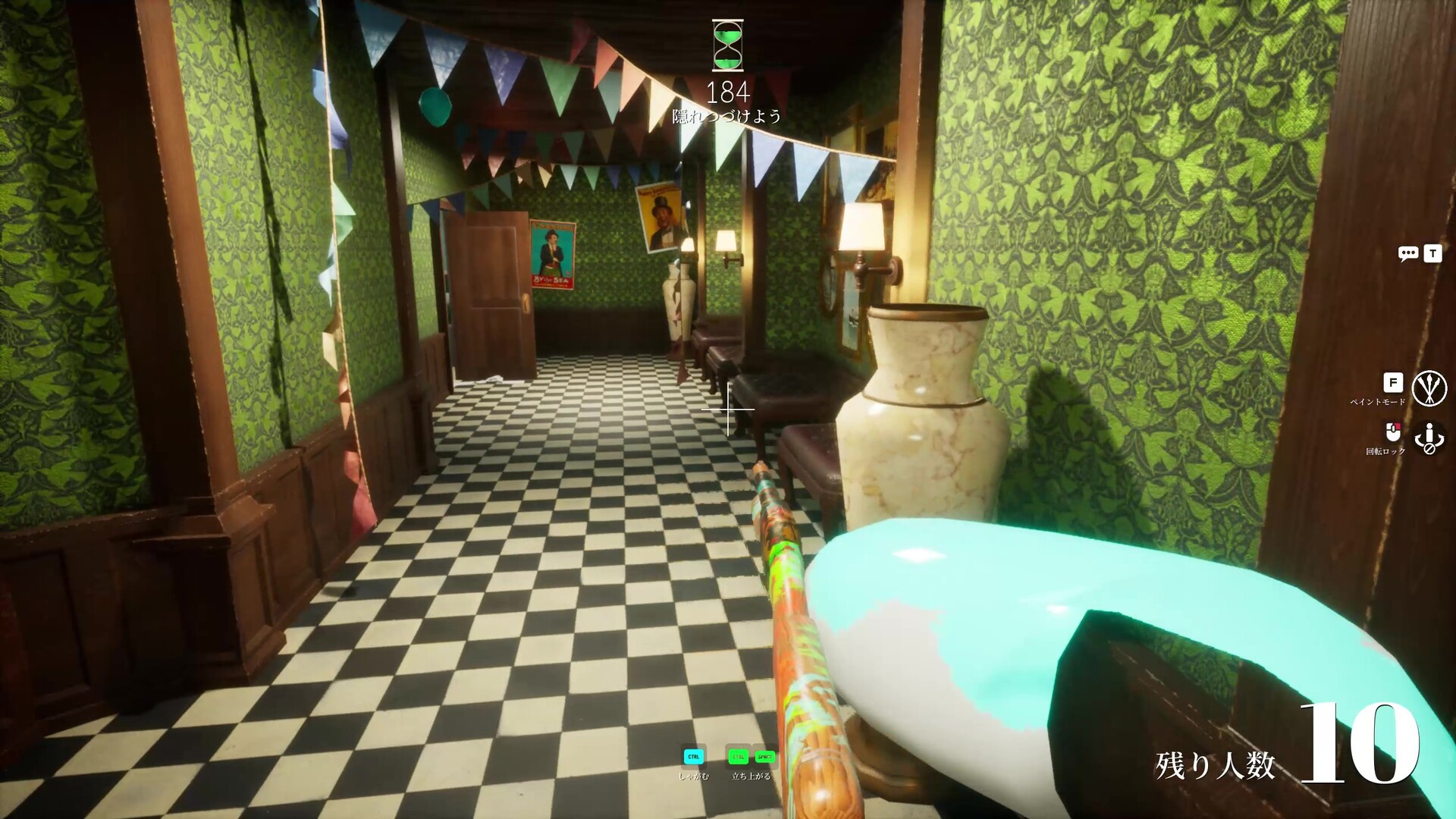
Red Brick Alcove
Red brick wall alcove with rich color layers — stand in the deepest part of the recess where mortar shadow and brick face create a natural value gradient. Featured in TheGamer's Brick Loft section and meccha-chameleon.net's hard-tier spot cards.
via TheGamer · TheGamer Community
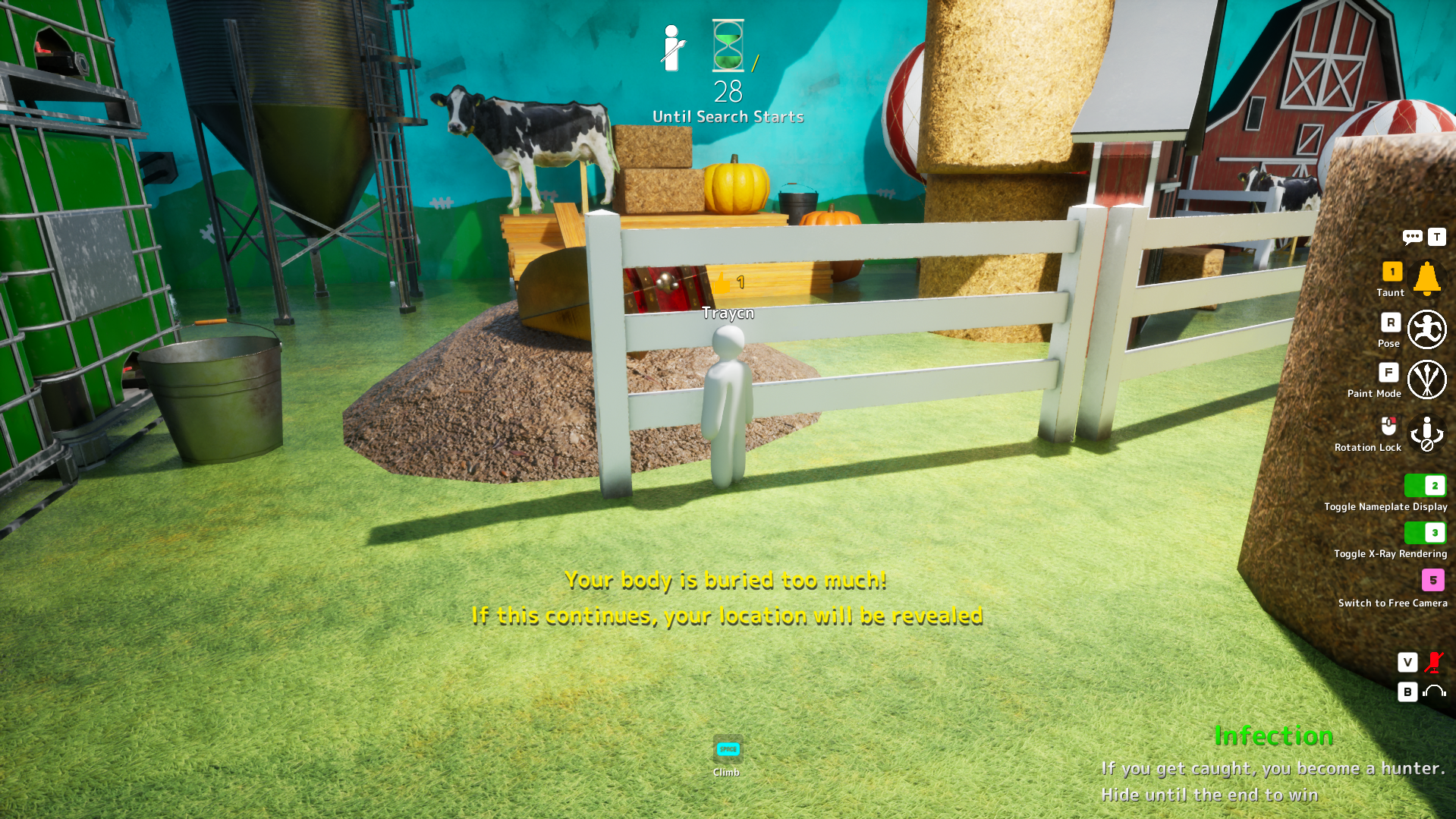
Cow Standee Prop
Cow standee prop mimic — perch on a standee and sample its surface, not the barn behind you.
via TheGamer · TheGamer Community
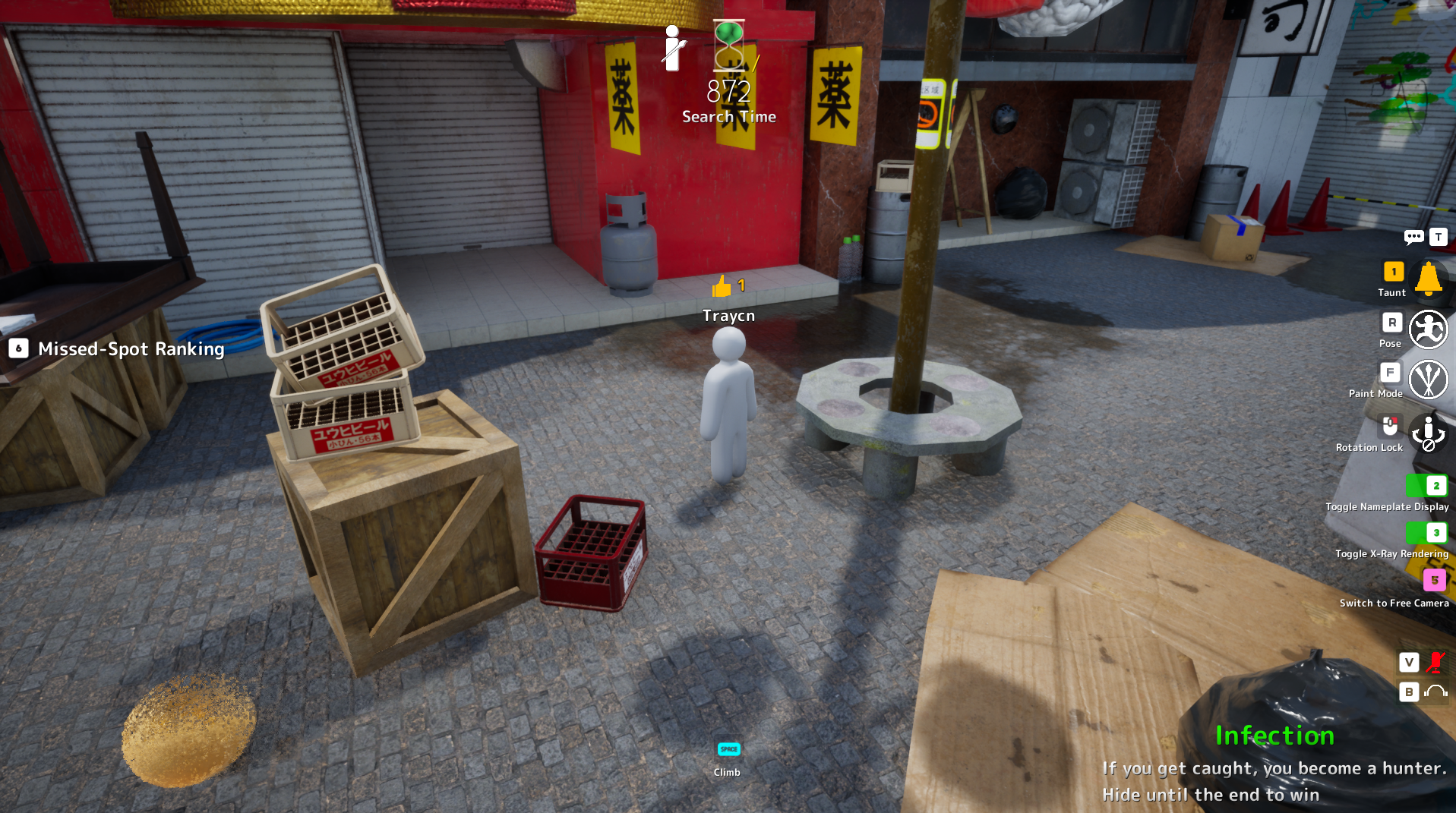
Open Shop Clutter
Open shop fronts with fans and crates — includes the community-favorite Uni Douraku storefront zone.
via IGN · IGN Editor Jen
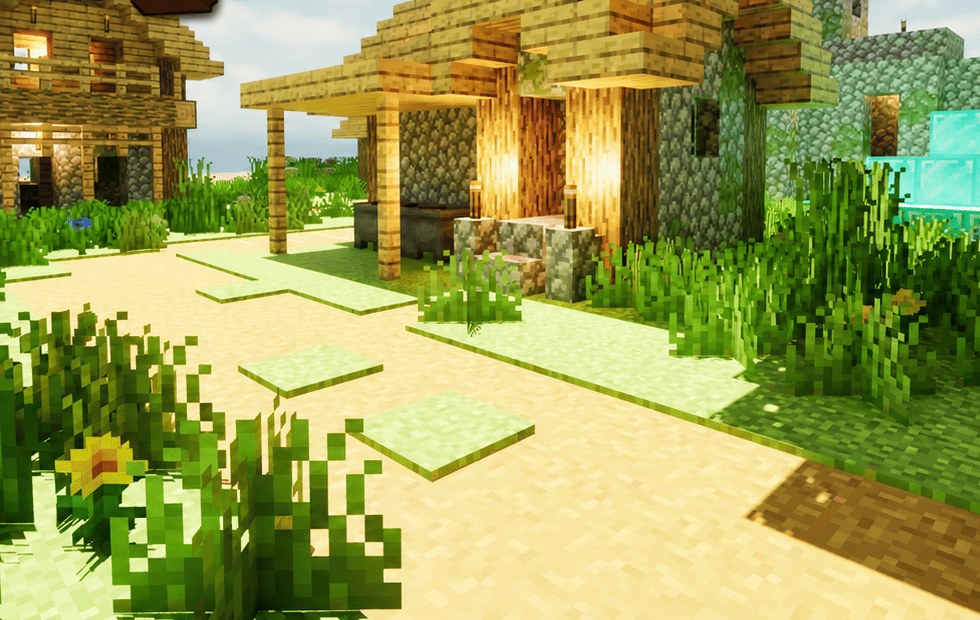
Village Crafting Table
Minecraft Village crafting table — GAMES.GG's top-tested blend on the #8 ranked workshop map.
via GAMES.GG · GAMES.GG
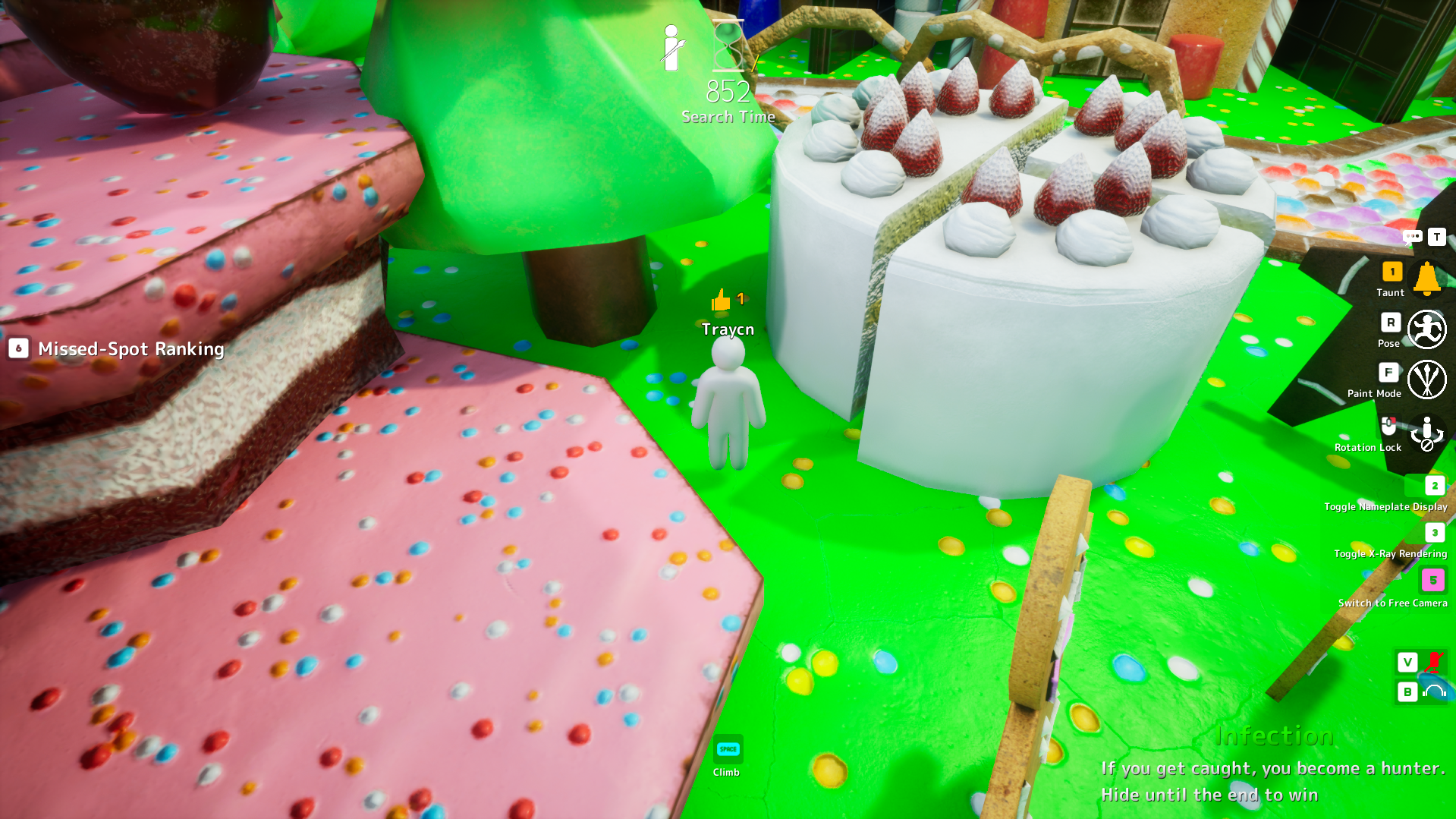
White Cake & Tree
Central white cake and candy tree — hide under branches or mimic a strawberry topper.
via IGN · IGN Editor Jen
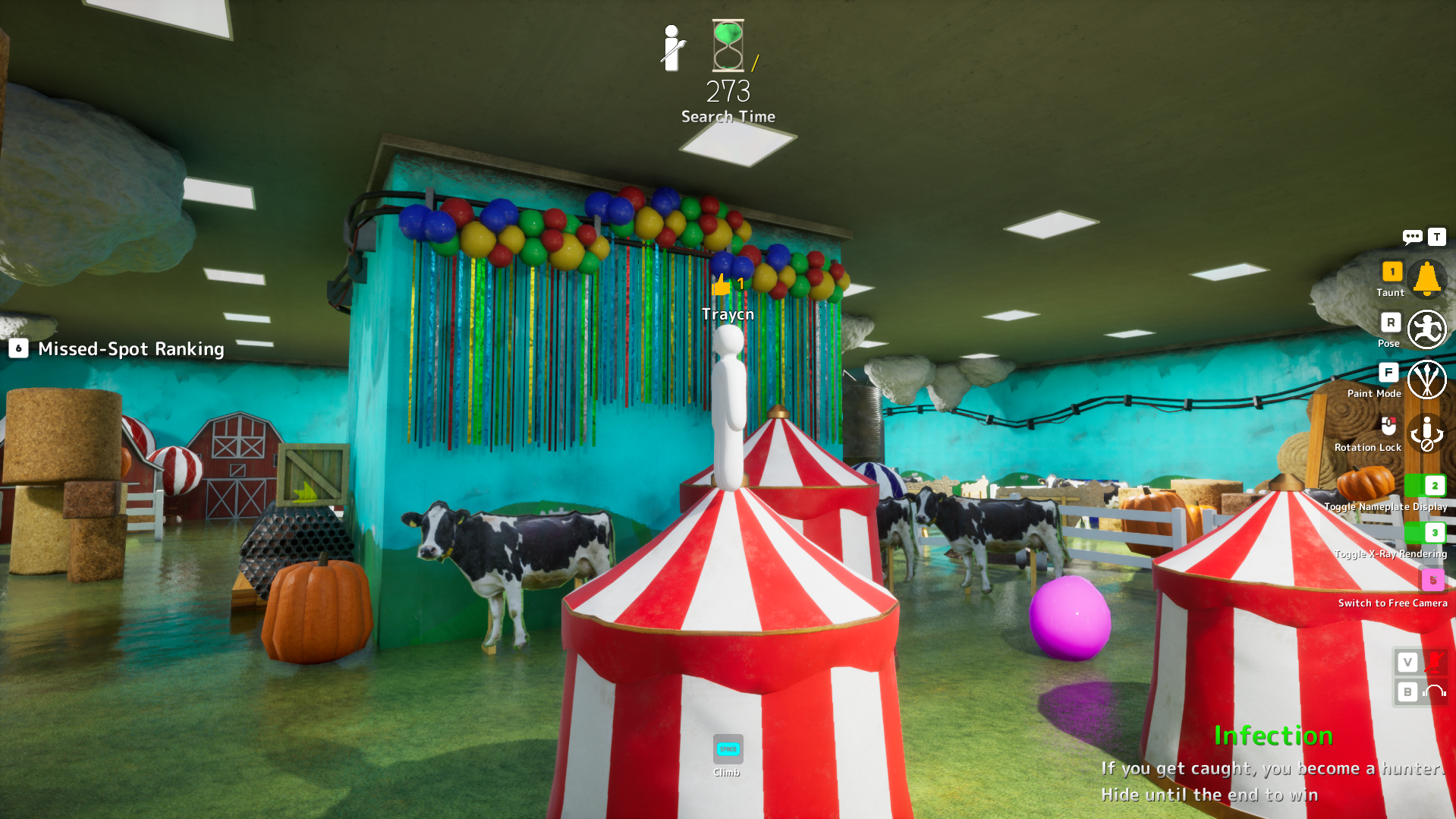
Ceiling Balloon Row
Ceiling balloon row near the cloud backdrop — TheGamer 6/27 vertical hide on Indoor Country.
via TheGamer · TheGamer Community
Most Successful Spots
Highest guide-rated hiding spots across all official maps
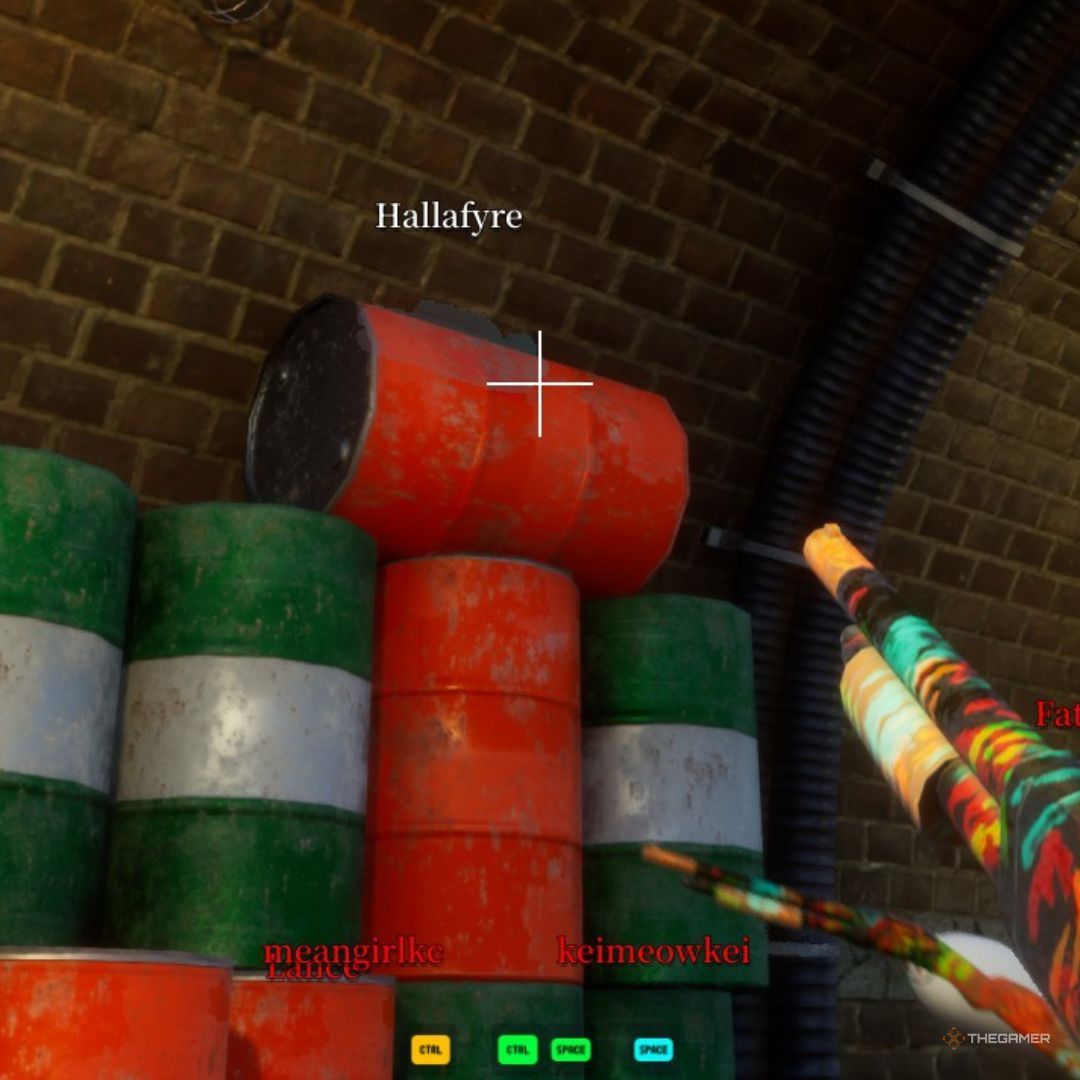
Dark Ceiling Pipe
Behind an overhead pipe in the darkest section. Community top-tier hide.
via TheGamer · TheGamer Community
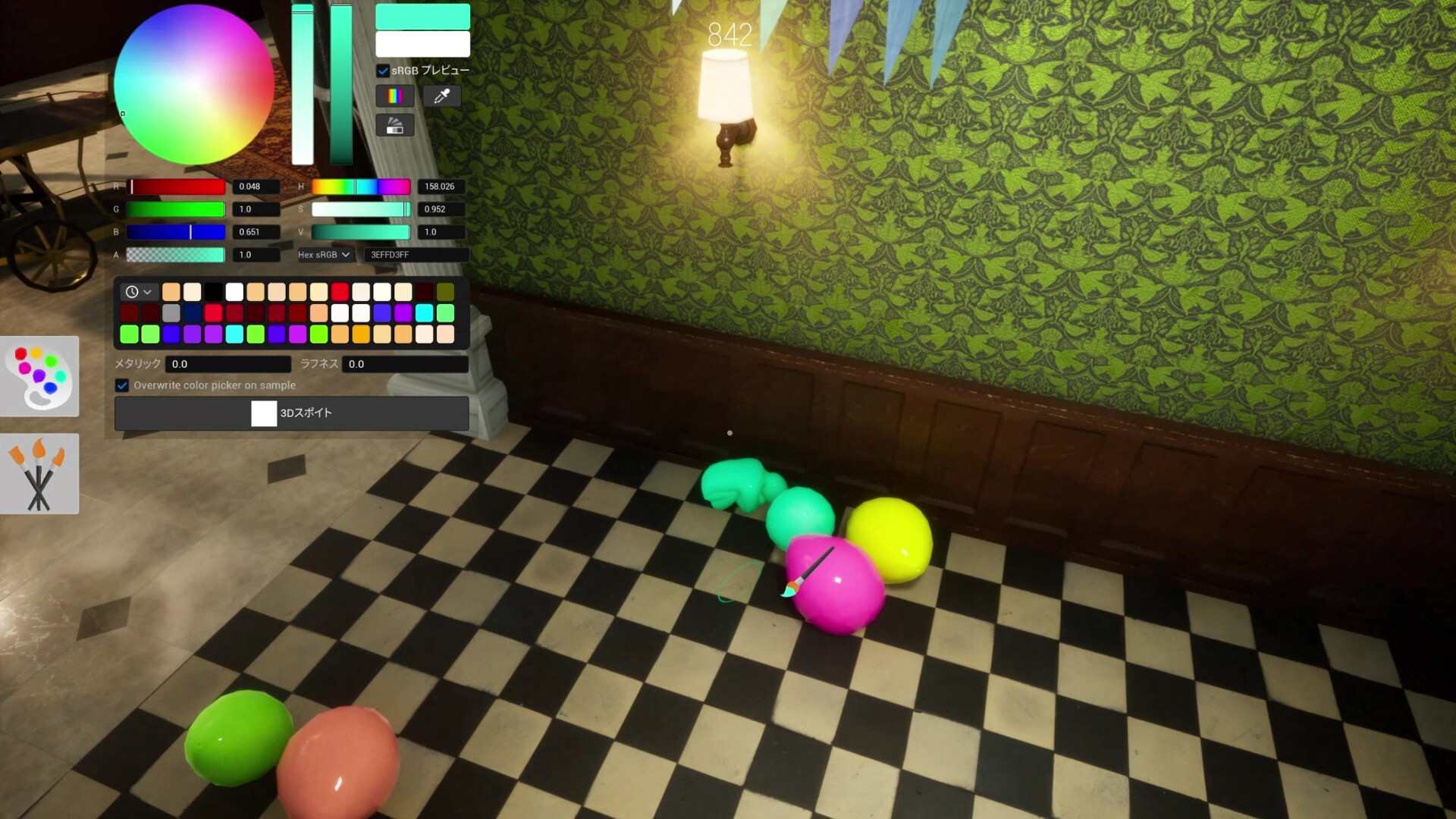
Shelf Back Row
Deepest rear shelf row. Top community survival rate on this map.
via meccha-chameleon.net · meccha-chameleon.net
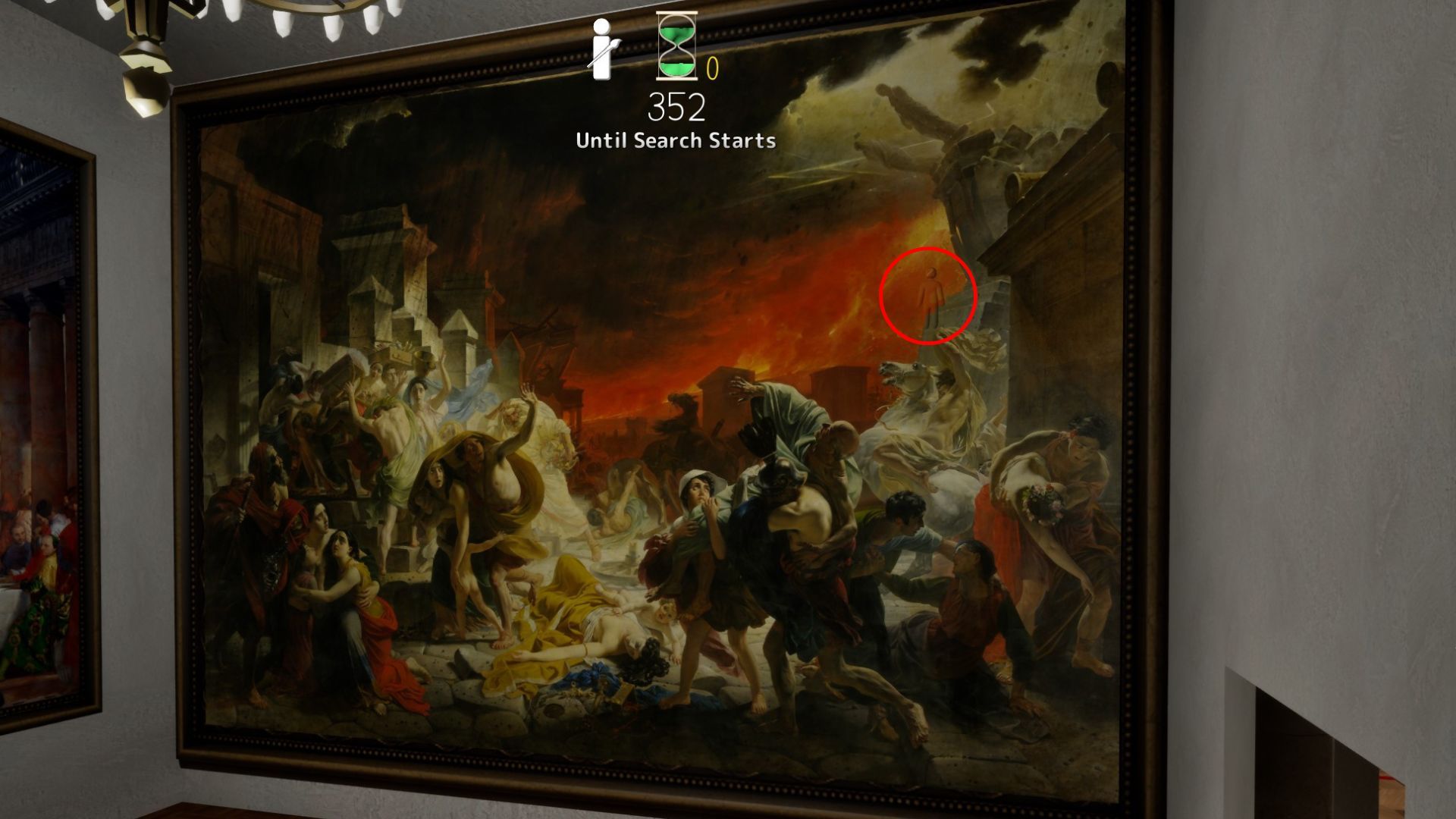
Last Day in Pompeii
Last Day in Pompeii — furthest room; top-left shadow, fire stone, or crowd zones fit multiple hiders.
via DualShockers · DualShockers
Mona Lisa Frame
Paint yourself into the Mona Lisa frame — Polygon's signature Art Gallery pick.
via DualShockers · DualShockers
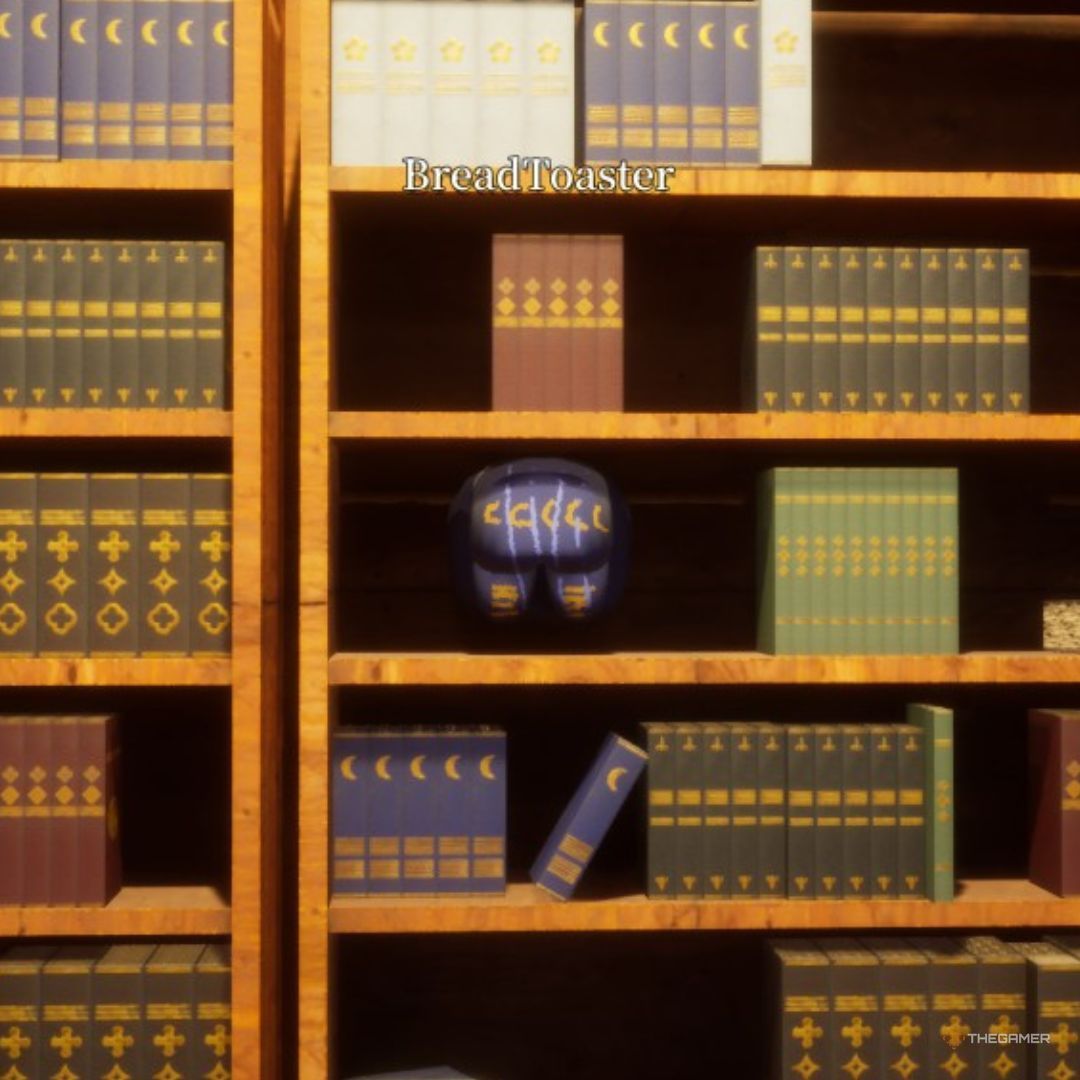
Library Shelf
Crouch between rear bookshelf rows disguised as book spines. One of the strongest verified Mansion spots.
via TheGamer · TheGamer Community
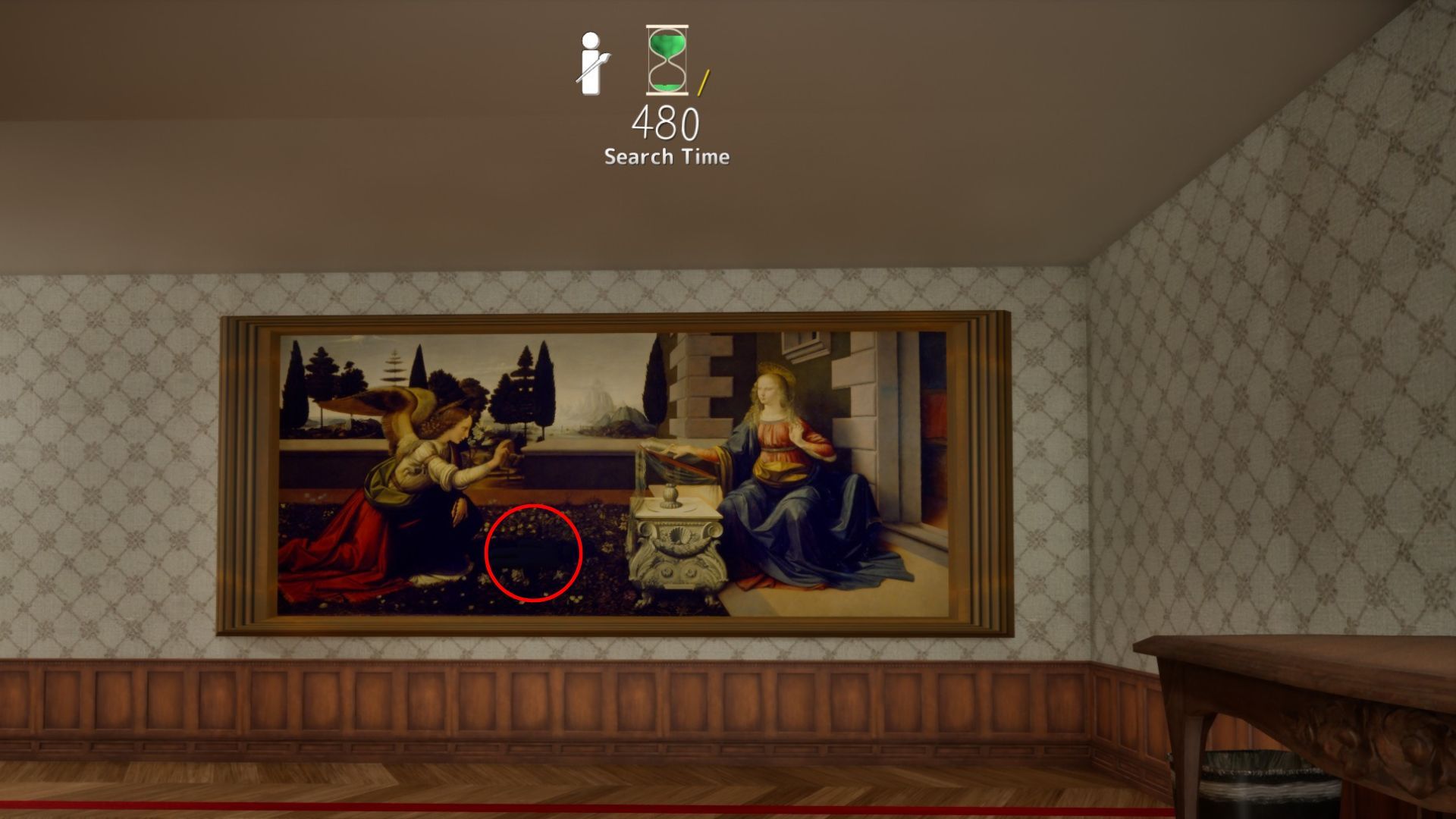
The Annunciation Shadow
The Annunciation shadow beside the winged figure — sideways pose in the dark strip.
via DualShockers · DualShockers
New Community Discoveries
Recently added spots from community references and guides

Escalator Glass Rail
Escalator and glass balcony rail — sample metal/glass; seekers look down from landings.
via Denfaminicogamer · Community

Splattered Pillar Blend
Skylight pillar and structural signage — match paint splatters plus surrounding white separately.
via consolepcgaming.com · Community

Atrium Display Recess
Display-cluster recess off the atrium — prop-mimic beside benches and shop fixtures.
via mecchachameleon.net · mecchachameleon.net / Community
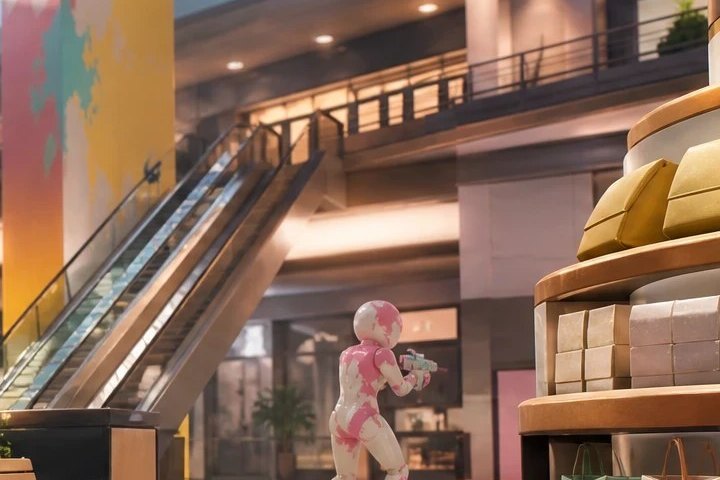
Upper Rail Display Clutter
Upper-level display clutter along the atrium rail — keep limbs inside fixture silhouette.
via Dengeki Online · Community
Fast-Food Counter
MegaMall fast-food counter clutter — TheGamer mall guide lists food-court shops as replayable hides.
via TheGamer · TheGamer

Instrument Shop Display
MegaMall instrument-shop display — TheGamer mall layout includes instrument stores besides grocery and arcade.
via TheGamer · TheGamer
Today's Spot
A new spot to try every day — come back tomorrow for another
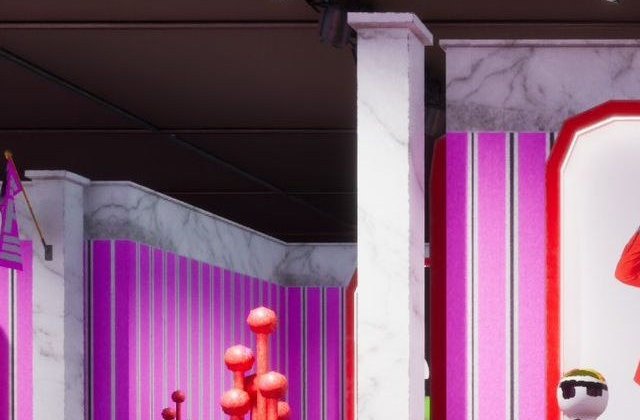
Popular Workshop Maps
Top Steam Workshop maps by subscriber count · Curated guides & hiding spots
ART GALLERY
5.0M Steam subscribers
Museum with famous paintings and portraits on the walls. Paint yourself into the Mona Lisa or blend with the floor — unique body-paint mechanics.
Minecraft
4.5M Steam subscribers
Blocky village layout with familiar textures. Great for groups learning custom maps — trees, crafting tables, and wood tones offer varied hides.
Simpsons Family House
3.8M Steam subscribers
Simpsons living room and kitchen interior. Instantly readable props — trending in community lobbies.
Bikini Bottom
3.6M Steam subscribers
SpongeBob SquarePants Bikini Bottom recreation. Pineapple house, Krusty Krab, and cartoon props — bright palette with iconic IP landmarks.
Swimming pool!
3.5M Steam subscribers
Small painted-style pool map. Bright colors and hand-drawn walls — community favorite for chaotic funny rounds.
Meeting room
3.3M Steam subscribers
Modern office interior with reception, cafeteria, and dense office props. Strong silhouette-breaking furniture.
Minecraft House
2.6M Steam subscribers
Survival house with a large yard. Hide as a torch, flower, or grass block — inside and outside hides.
Viking Dining [Re-subscribe if in sky]
2.5M Steam subscribers
Viking tavern with shields, swords, spears, and ale. Scattered props on a compact map — great for prop mimic.
CS2 Mirage
2.5M Steam subscribers
Counter-Strike Mirage layout with lanes, corners, and elevation. Familiar for FPS players — strong for organized seeker sweeps.
![Peak Airport [RE-FOLLOW TO UPDATE] workshop map](/images/workshop/peak-airport.png)
Peak Airport [RE-FOLLOW TO UPDATE]
2.4M Steam subscribers
PEAK-inspired airport terminal with dense interior props. Large competitive layout for organized seeker sweeps.
Police Station
2.3M Steam subscribers
Balanced law-enforcement interior with desks, cells, and corridors. Works well with a single hunter.
The Market
1.6M Steam subscribers
Rustic village market with stalls and cottages. Cute palette — easy color matching for casual nights.
Prop Hunt Guides
Survival strategies · Color tips · Map tactics
Meccha Chameleon First Match Checklist — New Player Setup (2026)
Just bought on Steam? Complete checklist before your first online match: install, launch fixes, controls, EULA, friend lobby, Mansion map, and what to read after round one.
How to Play Meccha Chameleon — Beginner Guide (2026)
Buy on Steam, join your first lobby, paint your body, pick a pose, and survive as Hider or tag everyone as Seeker. Covers Mecha Chameleon / Mecca Chameleon name variants and the full round loop.
Meccha Chameleon Tips and Tricks — Hider & Seeker Guide
Essential Meccha Chameleon tips and tricks: paint shortcuts, pose discipline, seeker scan habits, map meta, workshop tricks, and viral clip setups — aggregated from IGN, TheGamer, and community databases.
Meccha Chameleon Controls & Keybinds — Full PC Guide
Every default Meccha Chameleon control: WASD movement, F paint menu, R pose wheel, seeker tagging, camera orbit, whistle, free cam, rebinding, and what changed after patches.
Steam Game Wikis
CS2, Dota 2, Palworld, PUBG and 46 more — each wiki lives on its own route

Counter-Strike 2
Win more rounds with utility, economy, and default setups
Open wiki →
Dota 2
Lane, farm, and take objectives — not just kills
Open wiki →
Palworld
Catch Pals, automate the base, then survive the raid timer
Open wiki →
Marvel Rivals
Team-up bonuses and role cover win fights, not solo ults
Open wiki →
PUBG: BATTLEGROUNDS
Position, third-parties, and circle math beat hot drops
Open wiki →
EA SPORTS FC 26
Defend the box, keep the ball, and do not rage-queue Champs
Open wiki →Player Guides & FAQ
New to MECCHA CHAMELEON? Expand any topic below for in-depth tips on hiding spots, beginner mechanics, and workshop maps. For download, controls, and multiplayer help, see Help & FAQ.
What Is MECCHA CHAMELEON?
MECCHA CHAMELEON (often misspelled Mecha Chameleon or Mecca Chameleon) is a multiplayer hide-and-seek game built around a single core idea: disappear into the environment before seekers find you. Unlike traditional shooters or battle royales, winning a round as a hider depends on color matching, pose discipline, and map knowledge — not reflexes or aim. You sample colors from walls, floors, and props with an eyedropper tool, lock your body into a pose, and hope experienced seekers walk past without noticing the wrong shadow, the wrong edge, or the human-shaped lump behind a bookshelf.
Each round splits into two phases. During the preparation phase, hiders scatter across the map and set up their hide before the hunt timer starts. This is when you choose your spot, sample your color, and commit to a pose — not when seekers are already sweeping the room. Once the hunt phase begins, movement breaks your color lock and creates audio tells. Seekers scan for value mismatches (light vs dark), unnatural silhouettes, and the subtle movement of players who panic-run when spotted. Rounds are short, lobbies are chaotic, and the gap between a 40% survival rate and a 90% survival rate is almost always positioning and preparation, not mechanical skill.
The game ships with six official maps — Mansion, Sewer, Backrooms, Penguin Hotel, Cold Storage, and Brick Loft — each with distinct color palettes, verticality, and seeker sightlines. Mansion is the beginner-friendly manor with large wood and plaster color blocks. Sewer introduces ceiling pipes and rust-green metal tones. Backrooms punishes lazy sampling with subtly shifting yellow wallpaper from room to room. Penguin Hotel mixes ice blues with plush ballroom interiors. Cold Storage demands cold steel grays against refrigerated shelving. Brick Loft splits between warm exposed brick and dangerous second-floor sightlines.
Beyond official maps, the Steam Workshop community has published hundreds of custom layouts — from Minecraft villages and CS2 Mirage recreations to horror backrooms variants and meme pool maps. Workshop maps vary wildly in color count, prop density, and competitive balance. A three-color workshop map favors hiders who sample once and freeze; an eight-color map punishes anyone who does not re-sample at every zone transition. Understanding how map design affects hide viability is as important as knowing individual spot locations.
Meccha Wiki exists because scattered YouTube clips and forum posts are not enough. Players need a searchable database of curated hiding spots with editorial ratings, color tips, common mistakes, and source attribution. Our database tracks 50 spots sourced from TheGamer, IGN, meccha-chameleon.net, and community references. Each entry includes screenshots, map context, and guide-based difficulty scores — test spots yourself in live lobbies after patches.
Whether you are a new player learning eyedropper mechanics on Mansion, an intermediate hider graduating to Sewer ceiling routes, or a veteran hunting workshop meta on custom maps, this site is your reference layer. Browse the hidden spot database, read map-specific guides, and explore curated workshop maps with real Steam preview images and subscription counts. The goal is simple: stop dying in the first thirty seconds and start surviving full rounds with spots the community has already tested.
How to play guide →Best Hiding Spots Guide
Not all hiding spots are created equal. A viral ceiling clip might fail in your lobby because seekers developed ceiling-check habits, the spot was patched, or you set up during hunt phase when every eye was already watching. The best hiding spots share three traits: they break your outline against environmental clutter, they sit outside default seeker sightlines, and they let you sample a color that matches local value (lightness) as well as hue. Editorial ratings on this site summarize guide consensus and difficulty — they are not live match statistics.
On Mansion, the highest-rated guide spots cluster around bookshelf rows, kitchen shelving, and bathroom tile corners. Library Shelf (editorial rating 87/100) works because rear bookshelf rows break your body rectangle against dozens of spine colors and shadow gradients. Seekers scanning at chest height see books, not the gap between rows. The key setup: crouch between rear rows, sample spine color plus shadow, use a flat pose, and never stick past the shelf lip. Ceiling Pillar (84/100) rewards players who climb during prep phase and sample plaster beige — but only if your lobby is not ceiling-aware. Kitchen Shelving and Bathroom Tile Corner follow the same principle: large color blocks, single approach vectors, and poses that merge your silhouette into existing geometry.
Sewer is where verticality becomes mandatory. Dark Ceiling Pipe holds a 91/100 editorial rating — among the strongest on the map — because overhead pipes sit above default camera height and dark gray sampling disappears against rust-green metal in low light. Oil Barrel Top (85/100) works for players who can sample barrel metal and stay completely still on top; seekers often scan past barrel tops because they read as flat environmental props. The Sewer meta punishes floor-level habits: if you are still hiding at ground level after ten hours on Mansion, Sewer will expose you immediately. Learn ceiling routes before you queue Sewer in serious lobbies.
Backrooms is psychological warfare. Repetitive yellow halls confuse seekers but also confuse hiders who forget to re-sample when crossing doorways — wallpaper yellow shifts subtly room to room. The best Backrooms spots use chair stacks, office corners, and wall-clip positions that break sightlines in identical-looking rooms. Avoid long fluorescent corridors; they are rotation paths, not homes. Every verified Backrooms spot in our database notes the exact color hex range and whether the position still works after recent patches.
Cold Storage and Penguin Hotel are expert-tier official maps. Shelf Back Row on Cold Storage (91/100) demands steel blue sampling and a crouch at the bottom rear of the deepest shelf row. Seekers hate checking every gap between frozen inventory — that reluctance is your advantage. Penguin Hotel splits between ice sculpture zones that reward prop mimic and ballroom centers that seekers favor because open sightlines make movement tells obvious.
When evaluating any spot — official or workshop — run this checklist before you commit during prep phase. First: can you sample a color that matches both hue and value at your exact position? A perfect green on a shadowed pipe still pops because seekers notice brightness before undertone. Second: does the spot break your outline? Flat walls are bad; shelves, pipes, and furniture stacks are good. Third: how many approach vectors can seekers use? Single-entrance corners beat open junctions. Fourth: is this a rotation path? Loading bays, ballroom centers, and Backrooms corridors see constant foot traffic — cross them, do not camp them.
Editorial ratings summarize guide difficulty and consensus — they are not aggregated player votes. A spot at 85/100 is treated as highly reliable in source material; a spot at 60/100 may work in casual lobbies but fail when one experienced seeker knows the counter. Use our sort filters — Top Rated, Newest, Featured — to find spots that match your skill level and map preference. Filter by category for Best Hiding Spots, Funniest Spots, Impossible Spots, or Community Picks depending on whether you want to win or create content.
The fastest way to improve is not random exploration. Pick one map, open its dedicated map page, and work through the three highest-rated spots until you survive a full round on each. Record your deaths: if you die to the same room three times, your color — not your spot — is usually the problem. Re-sample at the exact pixel you touch. Go darker when in doubt. Light colors in shadow look like stickers; dark colors in shadow look like shadow. Pair database spots with our map strategy guides for Mansion, Sewer, Backrooms, and Cold Storage to understand why each position works, not just where it is.
Browse hiding spots →Beginner Tips for Mecha Chameleon
Every experienced hider was once the first player found every round. The difference between a beginner who dies in thirty seconds and an intermediate who survives full rounds is not talent — it is understanding three core systems before worrying about advanced spots or workshop meta. Master color sampling, pose locking, and seeker camera height on Mansion first. Everything else in this game flows from those three mechanics.
Color sampling is your primary survival tool. You eyedrop a surface and your body adopts that color. Perfect match makes you nearly invisible at a glance. Close match survives casual scans. Bad match glows like a warning sign. The most common beginner mistake is sampling the wall three feet away instead of the exact pixel your body touches. On gradient walls, corners and baseboards are darker — sample there if your pose is low. On dual-color zones like bathroom tile plus grout, sample both and choose the pose that hides your outline in the busier texture. When under pressure, prioritize matching value (dark vs light) over perfect hue. A slightly green-gray on a gray pipe beats a perfect green on a shadowed pipe.
Pose locking is the second system. You are not a free-moving character while hiding — you commit to a pose (flat against wall, crouch, object mimic) and breaking that pose costs precious seconds plus creates movement tells. Set your pose during prep phase, not after seekers spawn. If you are still moving when the hunt timer hits zero, you are already losing. Practice switching sample plus lock in under 1.5 seconds on Mansion bathroom tiles; that muscle memory transfers to every map in the game.
Seeker camera height is the third system most beginners ignore. Most players scan at chest and eye level. Spots above default sightlines — ceiling pipes, pillar tops, shelf backs — survive longer because seekers develop floor-level habits. This is why Sewer ceiling routes dominate high-level play and why Library Shelf works better than standing flat against a library wall. Think in layers: break your outline with environmental clutter, break sightlines with corners, and break height expectations when the lobby meta is floor-level.
Map choice matters for learning speed. Mansion is the correct first map. Rooms are readable, color blocks are large, and community spots like Library Shelf and Kitchen Shelving forgive small sampling mistakes. Spend your first ten hours here before touching Sewer or Backrooms. Sewer is your first skill check: verticality matters and open junctions kill careless crossers. Play Sewer when you can consistently survive one full Mansion round without moving at the wrong time. Backrooms adds psychological pressure with repetitive halls — learn chair stacks and office corners, avoid long corridors. Cold Storage and Brick Loft are expert territory; queue them when official easy and medium maps feel comfortable.
Stop making these beginner mistakes today. Mistake one: running in open space when spotted. The correct panic response is sample nearest wall, flat pose, freeze two seconds — most seekers overshoot. Mistake two: camping obvious props without matching prop color. Hiding inside a statue only works if you sampled statue stone, not the wall behind you. Mistake three: moving while seekers face you. Wait for back-turn or audio distraction. Mistake four: choosing pretty spots over functional spots. The viral ceiling clip fails if you set up during hunt phase. Mistake five: ignoring sound. Footsteps on tile, ladder climbs, and object mimic animations have audio cues — experienced seekers listen as much as they look.
Positioning fundamentals separate 60% survival from 85% survival. Move along walls, not through room centers — wall movement keeps one surface for emergency sampling. When choosing between two spots, pick the one with a single approach vector so you hear seekers coming. When rotating between rooms, re-sample at every doorway; Backrooms wallpaper yellow shifts subtly room to room. Never fight in bad zones: ballroom centers, loading bays, and fluorescent corridors are rotation paths. Cross them quickly or die.
Build a simple practice routine instead of grinding random queues. Week one: Mansion only, survive a full round without rotating more than twice. Week two: add Sewer ceiling routes, aim for one ceiling hide per round. Week three: Backrooms chair zones, zero deaths in fluorescent corridors. Week four: pick one workshop map and learn three curated spots from our database. Each session, test one new spot and note whether it worked for you — that is how you validate guide entries after patches.
Tips and tricks →Workshop Maps Explained
Steam Workshop extends Mecha Chameleon far beyond its six official maps. Community creators publish custom layouts ranging from competitive CS2 recreations and Minecraft villages to horror backrooms variants, office interiors, and chaotic meme maps. Workshop content keeps the game fresh — but it also introduces variables official maps never have: inconsistent color counts, untested sightlines, meme props that break competitive balance, and preview images that look nothing like in-game lighting. Understanding workshop map design helps you pick lobbies where your hide skills transfer instead of fighting the map itself.
Every workshop map has a color count — the number of distinct surface colors seekers must distinguish. Low color count maps (three to four colors) favor hiders who sample once and freeze; seekers struggle to spot value mismatches when the entire map shares a narrow palette. High color count maps (seven to eight colors) punish lazy sampling — you must re-sample at every zone transition or your undertone pops against a neighboring shade. Before you queue a workshop map, check its color count on our workshop pages. Medium maps (five to six colors) like Minecraft and Meeting Room offer the best balance for learning custom layouts without extreme seeker or hider advantage.
Workshop maps fall into rough categories that predict lobby behavior. Competitive maps — CS2 Mirage, Meeting Room, Minecraft — attract organized seeker sweeps and players who treat rounds seriously. Funny maps — Swimming Pool, meme layouts — favor chaos, content creation, and spots that would never survive a disciplined scan. Horror maps add atmospheric pressure and tight corridors that amplify sound tells. New This Week maps rotate constantly; early subscribers often discover broken spots before creators patch them. Our workshop directory curates maps with real Steam preview images, subscription data, and tags so you know what you are joining before you load in.
Popular community picks serve different purposes. Minecraft offers blocky village textures with trees, crafting tables, and wood tones — familiar zones for groups learning custom maps together. CS2 Mirage brings Counter-Strike lane structure with corners and elevation that FPS players already understand. Meeting Room delivers modern office interiors with reception areas, cafeterias, and dense furniture for silhouette breaking. Swimming Pool is a bright, hand-drawn chaos map for funny rounds rather than competitive grinding. Each map page on Meccha Wiki links directly to its Steam Workshop listing so you can subscribe with one click.
Workshop meta differs from official map meta in one critical way: spots are not pre-verified by years of community testing. A shelf gap that works on Mansion does not translate to a custom office prop arrangement. When exploring new workshop maps, treat our hidden spot database as a starting curriculum for official maps, then apply the same evaluation checklist — outline breaking, sightline control, color match quality, single approach vectors — to discover positions yourself. Record what works and what dies; the workshop ecosystem changes weekly as creators update layouts and players find new exploits.
Use workshop maps strategically in your improvement path. Start with medium color count competitive maps after you can survive official Mansion and Sewer consistently. Avoid pure meme maps until your fundamentals are solid — funny rounds teach content creation, not survival discipline. When a workshop map clicks for your group, subscribe and learn three positions per zone before moving to the next map. Our workshop meta guide covers color-count strategy, seeker sweep patterns on custom layouts, and how to read workshop tags before you queue. Browse the full workshop directory for curated picks updated from live Steam Workshop data.
Workshop map directory →Fair Play, Exploits & What Players Ask For
Launch-week Steam Discussions and top reviews highlight topics beyond basic hiding tips — and Meccha Wiki tracks them with sourced guides so you are not guessing from scattered threads. Noclip and geometry clipping dominate negative feedback: reviewers report bird's-eye seeker vantage points through walls and hiders becoming untaggable inside props on nearly every official map. Our Noclip & Exploits Guide documents verified reports, Mansion armor-statue cheese threads, and practical responses (leave lobby, private rooms, no intentional abuse).
Fairness debates extend to ESP and external trainers. Steam threads titled "This game is being destroyed by ESP cheaters" spiked alongside Kotaku's coverage of 244k concurrent players on SteamDB. Our Cheaters & Fair Play Guide separates third-party tool risks (documented by community explainers) from broken geometry sessions, and points to v1.7.0 in-game reporting when your client is updated. Public Lobby Guide covers griefing, spectator leaks, and moderation gaps that overlap with cheat frustration.
Multiplayer connectivity remains the highest-volume support category: can't join lobby, in-game invite failures, version mismatch, and EULA agreement blocks when one player skipped the terms prompt. Our fix guides walk through fresh rooms, Find Server workarounds, and EULA parity before firewall changes. Painting limitations also appear in reviews — no undo button, pixelated brush resolution on detailed lines, and UI controls that new players find unintuitive. Help topics cover brush resize, Spacebar eyedropper accuracy, and prep workflows that work within current model fidelity.
Feature requests players repeat in reviews include round-end hide galleries (so everyone sees clever spots, not just the tagging seeker), taunt from free camera, body resize for the rotund default model, and whistle scoring that some reviewers expected to boost hidden points. We document what works today — free camera after elimination, forced taunt host settings, silhouette-first hiding — and link iconic viral clips (including Kotaku's horse-statue meme wave) so you learn from community creativity without inventing mechanics.
Newer community threads add prop-mimic and cluster-hide strategy (cow standees, hay piles, gumdrop clusters) as the strongest beginner-friendly meta — see our Prop Mimic & Cluster Hiding guide with Indoor Country spot screenshots. Hunter ammo limits from v2.3.0 address Steam complaints about unlimited seeker spraying. The results screen answer check (SlashSkill, mecchachameleonwiki.com) reveals every hide plus Missed Spot rankings for seekers — use it as a teaching loop. Invert Y axis remains a top controls request without a confirmed native toggle at report time.
Update v1.8.0 added 11 emotes to the R-key pose wheel (mecchachameleon.net); v3.2.0 adds 12 more — see Emotes & Pose Wheel guide. Texture brush and checkerboard copy remain Steam wishlist items, not shipped tools; Pattern & Texture Wishlist guide documents manual workarounds. Controller support: v3.1.0 enables non-UI gamepad operations (Steam News) — Deck players still benefit from trackpad precision for eyedropper work (Controller Support guide).
If you are deciding whether to buy or return: reviewers who recommend the game often play private friend lobbies without clipping abuse and accept that public matchmaking still carries polish gaps. Use password rooms, same-patch invites, and our demand library to find guides matching your exact question — bug fix, map strategy, or fair-play workaround — instead of relying on outdated launch-week Reddit threads alone.
Late-July / August 2026 community buzz clusters around Shopping Mall (v3.9.0 15th official atrium — Denfaminicogamer / Dengeki; planter and handbag-shelf meta), LEMORION saying the next official map is the last except collabs, Mo Eeyo unanimous skip-votes and session-only host BAN (v3.8.0), 20 million copies sold (Steam News August 12), player IDs on User Management (3.9.0), emote reverse paging and ceiling-cling gaps (3.9.1), Deep Sea OOB closed in fix3.7.2 (Steam title typo fix7.3.2), Deep Sea (v3.6.0 underwater reef — Denfaminicogamer / Game*Spark; coral / wreck / fauna meta), settings that persist after restart + Eeyan reset (3.6.0), crowded-lobby FPS and chat-filter softening (fix3.6.1), first Emote Contest winners (3.7.0 / Aug 9), Exit 8 (v3.5.0 collab underground corridor — Famitsu / Game*Spark; anomaly-mimic meta), friend-server search + Friend List restore (3.5.0 / 3.5.1), hunter body types for seekers (3.4.0), proximity voice temporarily disabled for rework (3.3.2) with mic muted by default (3.5.0), Garten of Banban (v3.1.0), Workshop malware maps + a brief official Discord breach then restore (TheGamer / Polygon / Steam safety posts), Greece (v3.0.0 Santorini + Ilios meme pit), glow/emissive paint (v2.9.0), Plump body type (v3.3.0), 12 new emotes and eyedropper palette UI change (v3.2.0), Death Burger carnival meta (v2.8.0), HIKAKIN Museum (v2.6.0), Egypt and random-map lottery toggles (v2.7.0), platform questions (Platforms guide), the 15 million then 20 million sales milestones (Viral Success guide), and silhouette tactics (Silhouette & Shadow guide). Each page cites press, Steam News, or regional guides — not invented patch promises.
Updates & patch notes →